
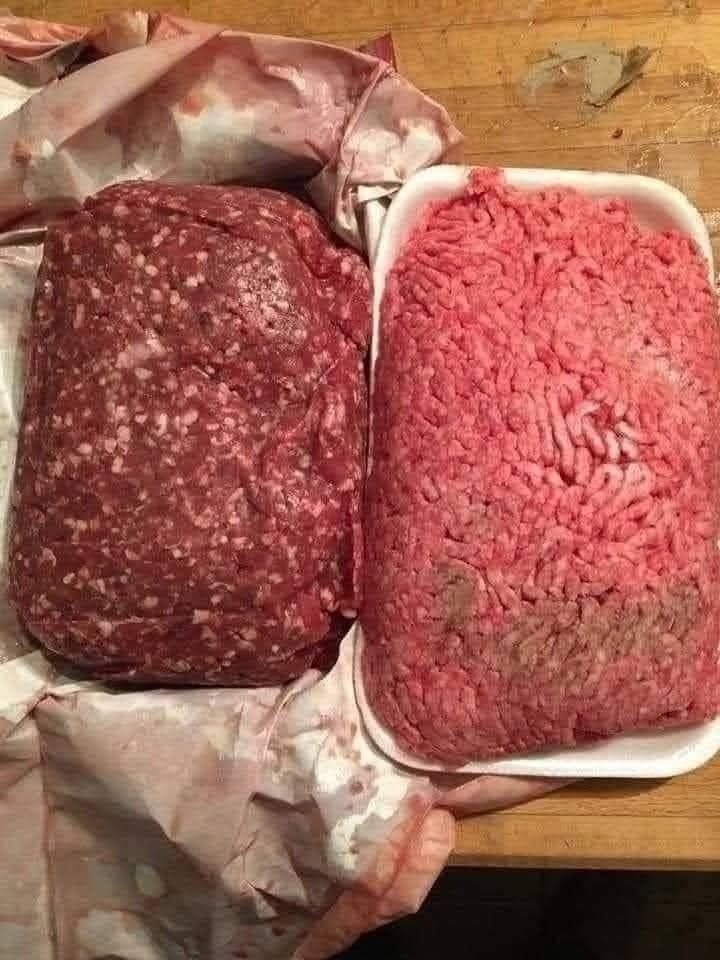
You open the refrigerator.
Reach for the steak.
And wonder:
Where did this come from?
How was it raised?
Is it really as good as I remember from my childhood?
For many, beef isn’t just food.
It’s memory.
Tradition.
A Sunday roast with family.
A backyard grill on summer nights.
But today’s meat aisle can feel overwhelming — packed with labels like:
“Grass-Fed”
“Organic”
“Hormone-Free”
“Locally Raised”
And behind them all lies a bigger question:
👉 What’s the real difference between store-bought beef and farm-raised beef?
Let’s cut through the noise — so you can make choices that match your values, budget, and taste — without confusion or guilt.
Because real confidence in your food doesn’t come from hype.
It comes from understanding what’s on your plate.
🔍 What Do We Mean by “Store-Bought” vs. “Farm-Raised”?
Before we dive in, let’s clarify what these terms really mean:
Term
What It Typically Means
✅ Store-Bought Beef
Sold in supermarkets; sourced from large-scale producers, often grain-finished in feedlots
✅ Farm-Raised (or Local) Beef
Raised on smaller farms, often pasture-raised, grass-fed, and sold directly to consumers via farmers markets, co-ops, or CSAs
📌 Important: These aren’t official categories — so definitions vary. Always check sourcing details when possible.
🧪 Key Differences at a Glance
Factor
Store-Bought Beef
Farm-Raised Beef
✅ Source & Scale
Large commercial operations
Small to mid-size farms
✅ Feeding Practices
Often grain-finished (corn/sorghum) for faster growth
More likely grass-fed/finished — though not always
✅ Antibiotics & Hormones
May be used for growth promotion (in conventional systems)
Often labeled “raised without hormones” or “no antibiotics” — but verify claims
✅ Transparency
Limited — origin may be pooled from multiple states/countries
Higher — many farms share stories, photos, even farm visits
✅ Cost
Generally lower per pound
Usually higher due to labor-intensive methods
✅ Availability
Year-round, widely accessible
Seasonal or limited supply in some areas
💡 Neither is inherently “better” — each has trade-offs.
🌱 How Cattle Are Raised: What Matters Most
1. Diet: Grass vs. Grain
Grass-Fed: Cattle eat only grass and forage their entire lives
Grain-Finished: Cattle start on grass, then move to feedlots where they’re fed grain to add marbling and weight
📊 Nutritional differences:
Nutrient
Grass-Fed Advantage
✅ Omega-3 fatty acids
Slightly higher
✅ Conjugated linoleic acid (CLA)
Modestly higher — studied for potential health benefits
✅ Vitamin E & antioxidants
Tend to be higher
But the differences are modest — and both types provide high-quality protein, iron, zinc, and B12.
⚠️ Note: Not all “farm-raised” = grass-fed. Ask questions.
2. Animal Welfare & Living Conditions
Many farm-raised animals spend their lives on pasture with space to roam — which supports natural behaviors.
In contrast, conventional feedlot systems prioritize efficiency — and while regulated, they offer less space per animal.
🔍 Look for third-party certifications:
Animal Welfare Approved
Certified Humane
Global Animal Partnership (GAP)
These ensure higher welfare standards — whether store-bought or local.
3. Environmental Impact
Large-scale operations use more fossil fuels, water, and generate concentrated waste — but produce meat efficiently
Small farms often use rotational grazing (good for soil health), but require more land per pound of beef
🌍 Both models face challenges. Sustainable beef production is evolving — no perfect answer yet.
🛒 What About Labels? Decoding the Terms
The packaging can be confusing — here’s what common labels actually mean:
NEXT PAGE
ADVERTISEMENT

