
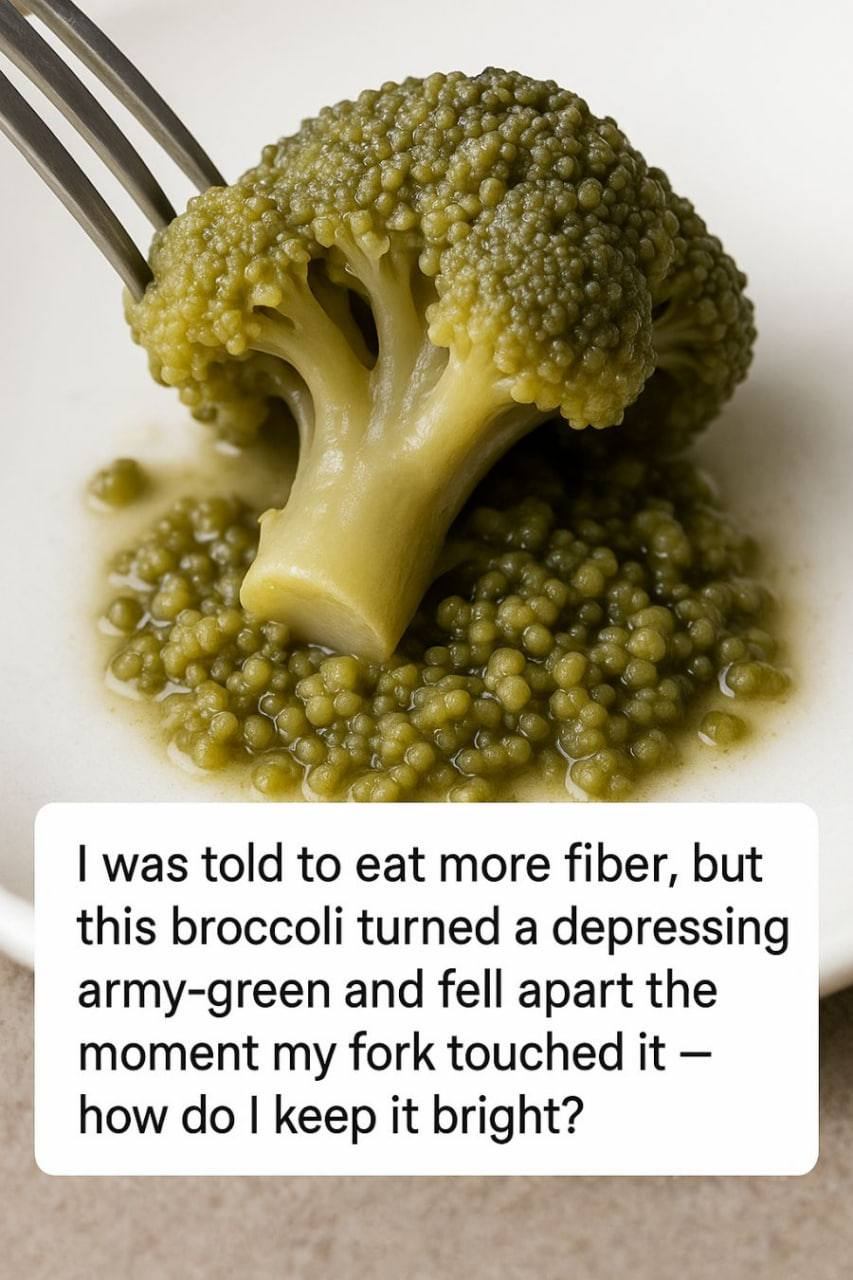
Eating more fiber is a common piece of dietary advice, often accompanied by the suggestion to incorporate more vegetables, like broccoli, into your meals. However, achieving perfectly cooked broccoli that retains its vibrant green color can be a challenge. Many home cooks find themselves confronted with broccoli that turns an unappetizing army-green and falls apart at the slightest touch, making the quest for a healthier diet seem daunting.
Luckily, maintaining the bright green color of broccoli is possible with a few simple techniques. Understanding the science behind broccoli’s transformation and employing some tried-and-true cooking methods can help you achieve delicious, aesthetically pleasing results, ensuring your fiber-rich meals are as enjoyable to eat as they are nutritious.
1. Why Your Broccoli Turns Army-Green: The Science of Chlorophyll Breakdown
Broccoli owes its appealing green hue to chlorophyll, a pigment found in plants that plays a crucial role in photosynthesis. However, when exposed to prolonged heat, chlorophyll breaks down, leading to the dull, army-green color many of us are familiar with. This breakdown is primarily due to the transformation of chlorophyll into pheophytin, which occurs when magnesium ions in chlorophyll are replaced by hydrogen ions. The result is an unappetizing color change that can make vegetables look overcooked and unappealing.
To prevent this color change, it’s essential to minimize the time broccoli spends exposed to high heat. Quick cooking methods that preserve chlorophyll can keep your broccoli looking fresh and vibrant. Additionally, understanding how temperature and acidity affect chlorophyll can help you adjust your cooking techniques accordingly.
2. The Acid–Alkaline Trap: How Water pH and Additives Change Broccoli’s Color
The pH level of the water in which you cook broccoli can significantly impact its color. Acidic environments, such as those created by adding lemon juice or vinegar, can increase the rate of chlorophyll breakdown, resulting in a duller color. Conversely, alkaline environments can help preserve the green color, but they can also negatively affect texture and flavor.
While some cooks might be tempted to add baking soda to the cooking water to create an alkaline environment, this can lead to mushy broccoli with an unpleasant taste. Instead, achieving a balance by using neutral or slightly alkaline water can help maintain color without compromising texture.
For Complete Cooking STEPS Please Head On Over To Next Page Or Open button (>) and don’t forget to SHARE with your Facebook friends
3. Timing Is Everything: How Long to Cook Broccoli Before It Starts to Dull
Cooking broccoli for too long is a surefire way to drain it of its vibrant color and crisp texture. To preserve its hue, aim to cook broccoli for just 3 to 5 minutes, depending on the size of the florets. This short cooking time allows the broccoli to become tender-crisp while retaining its chlorophyll.
Keep a close eye on the broccoli as it cooks, testing it with a fork to check for doneness. Remember that residual heat will continue to cook the broccoli even after it has been removed from the heat source, so it’s best to slightly undercook and allow carryover cooking to finish the job.
4. Blanch and Shock: The Classic Chef’s Trick for Vivid, Crisp-Tender Broccoli
Blanching and shocking is a technique used by chefs to maintain the bright color and crisp texture of vegetables. To blanch broccoli, briefly boil it in salted water for about 2 to 3 minutes, then immediately transfer it to an ice bath to halt the cooking process. This method not only preserves color but also enhances the broccoli’s natural sweetness.
After shocking the broccoli, drain it thoroughly and pat it dry before using it in your dish. This technique is particularly useful if you’re preparing broccoli for salads or other cold dishes, as it ensures the broccoli remains vibrant and fresh.
5. Steam, Don’t Boil: The Easiest Everyday Method to Keep Broccoli Bright
Steaming is a gentle cooking method that helps preserve the color and nutrients of broccoli. By using steam instead of boiling water, you reduce the risk of overcooking and color loss. To steam broccoli, place florets in a steamer basket over boiling water, cover, and cook for 4 to 5 minutes until tender-crisp.
Steaming also allows you to control the cooking process more precisely, as the broccoli is not directly submerged in water. This method is ideal for preserving the natural flavor and bright green color of broccoli, making it an excellent everyday cooking technique.
6. Salt the Water (But Skip the Baking Soda): The Simple Pantry Fix for Better Color
Adding salt to the cooking water can help preserve the color and flavor of broccoli. Salt enhances the natural taste of the vegetable while also helping to maintain its green hue by creating a slightly alkaline cooking environment. Use about 1 to 2 teaspoons of salt per quart of water when boiling or blanching broccoli.
While some may suggest adding baking soda to the water to boost alkalinity, this can lead to undesirable changes in texture and taste. Stick to salt, which provides the right balance of alkalinity without compromising the quality of the broccoli.
NEXT PAGE
ADVERTISEMENT

